

Why Self-improvement in 2026 Doesn’t Feel REAL Anymore
How self-improvement and mental health work together

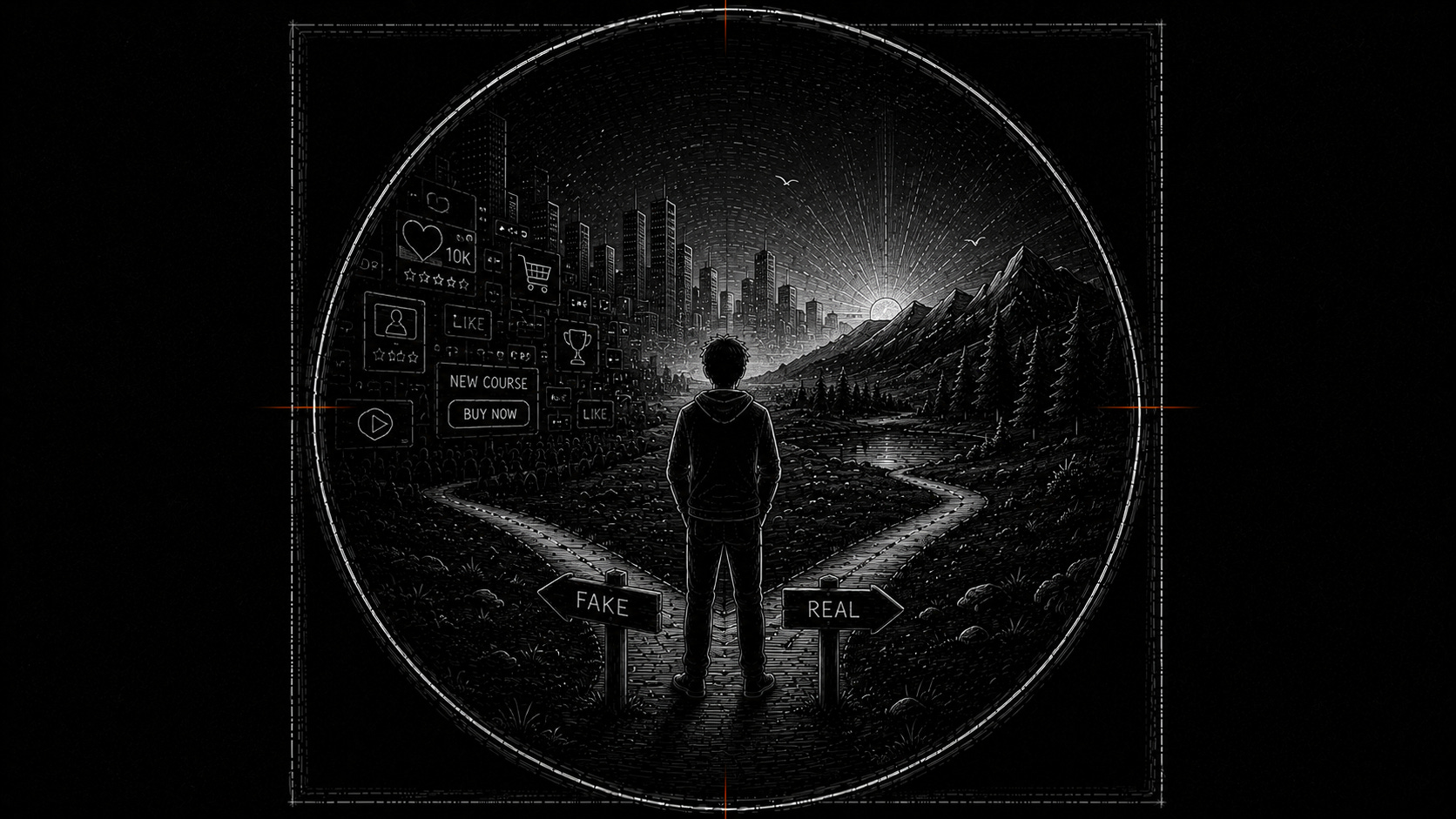
There’s a lot of talk about self-improvement now. Discipline, routines, progress, staying consistent. You see it everywhere, and on paper, it all makes sense.
So why does something still feel off?
You can be doing everything you’re supposed to do and still feel like something isn’t clicking. You’re trying to stay consistent, you’re making better decisions, you’re more aware than you used to be, but it doesn’t feel grounded. It feels like you’re doing the work without actually feeling the result of it.
That’s the part people don’t really talk about. Because from the outside, it looks like progress, but internally, it can feel empty.
The issue isn’t that you’re not improving. It’s that a lot of what’s called self-improvement now is built around how it looks, not how it actually works. At some point, it shifted. It stopped being something you experience and became something you show.
You don’t just build habits anymore, you present them. You don’t just make progress, you track it, post it, and make it visible. Even if you don’t think you care about that, it still affects how you move. Because once something becomes visible, it also becomes something you measure, and that’s where things start to change.
Instead of asking if something is actually helping you, you start asking if it looks like progress. That shift is small, but it’s enough to disconnect you from what you’re doing.
You can follow a routine that looks disciplined and still feel all over the place. You can stay busy and still feel like you’re not moving forward. You can copy habits that work for someone else and wonder why they don’t stick for you.
At first, it still feels like progress, because doing something always feels better than doing nothing, but over time it stops landing, because it was never built around you in the first place.
That’s why it starts to feel fake. A lot of people are building their version of self-improvement based on what they’ve seen, not what they’ve actually understood.
You see routines online, you see people being consistent, you see people improving, and without realising it, you start building your own version around that. Not around how your mind works, not around your mental health, not around your actual day-to-day life. And that’s where things quietly fall apart.
Because your mind isn’t generic, and your mindset (what your mind is set on, and your perception of those things) isn’t the same as everyone else’s. Our minds are like the fingerprint on our thumbs, unique. So following something that looks right doesn’t mean it works right.
That’s also why a lot of advice doesn’t reach people. It sounds good, but it doesn’t connect, because it skips the part that actually matters.
Someone dealing with anxiety isn’t going to experience discipline the same way. Someone dealing with depression isn’t going to respond to “just stay consistent” the same way. So when it doesn’t work, you don’t question the method, you question yourself, and that’s where the disconnect gets deeper.
Now add everything else on top of that. You’re constantly seeing what other people are doing. Their routines, their habits, their results. Even if you don’t mean to compare, you do, quietly.
You feel like you should be doing more, like you should be further ahead, like what you’re doing isn’t enough, even when it is. Because you’re measuring internal progress against external snapshots, and those two things never line up.
Over time, your mind starts to link progress with being seen. So when you do something right, it doesn’t fully register, not until it’s visible, not until it’s acknowledged.
That’s when self-improvement turns into performance, and performance doesn’t feel real, because it isn’t.
It looks like movement, but underneath, it rarely is.
That’s why you can feel stuck even when you’re doing everything right on paper. Real self-growth doesn’t come from looking productive, it comes from understanding yourself properly. What actually helps you, what actually drains you, what actually fits your life.
That part isn’t visible, and that’s exactly why most people avoid it, but that’s also the part that makes it feel real again.
Because once what you’re doing actually matches how your mind works, it stops feeling forced. You don’t need to show it, you don’t need to prove it, you don’t need to measure it against anyone else.
It just makes sense.
That’s the difference between something that looks like self-improvement, and something that actually is.
Josh DG.
Josh DG writes about mental health and self-improvement. He explores the mind, anxiety, and depression, showing why self-improvement only works when mental health is part of the process.
His content is honest and grounded, shaped by experiences rather than distant theory. He understands that when it comes to mental health and self-improvement, what works for one person may not work for another. That belief runs through all of his work, offering perspectives that are real.
Hi Josh, the line that stayed with me is: “It stopped being something you experience and became something you show.”
That feels like the quiet fracture in so much of modern self-improvement. We can be tracking, posting, staying consistent, looking disciplined from the outside, and still feel far away from ourselves inside.
What I appreciate here is how you brought the mind back into the room. Growth cannot only be about habits if the person carrying those habits is anxious, tired, depressed, comparing, or quietly performing. A routine that does not fit the life underneath it can become another place we abandon ourselves.
Real progress feels different when it is built from understanding, not pressure. It stops needing so much proof.
It just begins to make sense. 🤍