

Fear Of Missing Out (FOMO): Social Media Amplifies Anxiety
FOMO isn’t just about missing out. Social media can make you feel like everyone else is enjoying life while you’re stuck behind.

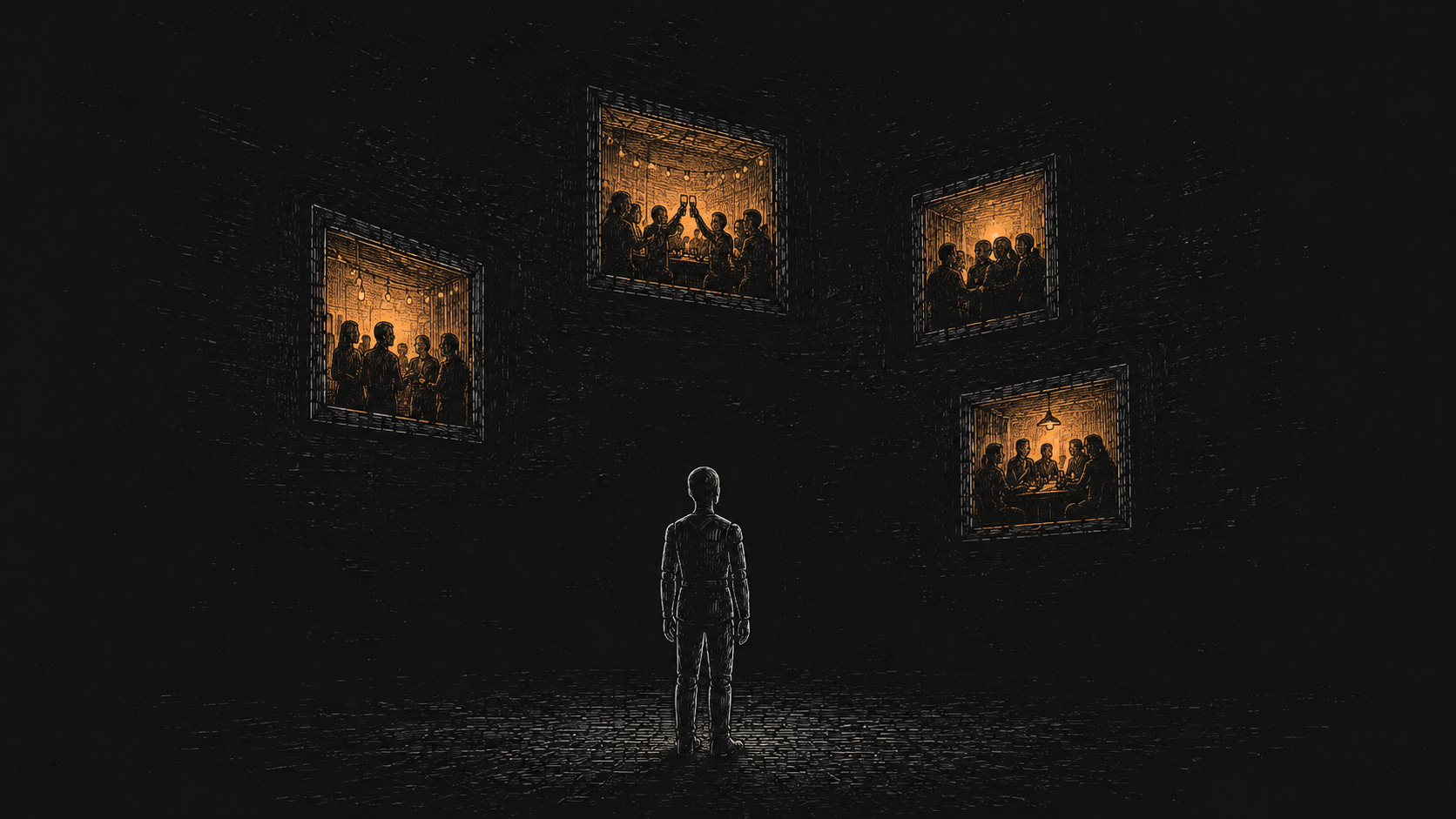
How Social Media Triggers Your FOMO:
You can be having a normal day, then one scroll makes your life feel more insignificant than it did five seconds ago.
Fear of missing out, or FOMO, doesn’t always show up as a thought. It can shift in your body, your mood, or the way you suddenly look at your own life after seeing someone else’s. You might see a group of people out together, someone travelling, somebody celebrating an achievement, or someone your age reaching a stage of life you thought you would be closer to by now. Before you’ve even worked out why those feelings have happened, something in you feels hollow again.
FOMO can feel different in the age of social media because it’s no longer just hearing about something afterwards. It’s seeing it happening in real time, there and then. Seeing who was there, seeing who commented, seeing who liked it, and seeing the same moment repeated across different people’s stories until it feels bigger than it probably was.
Social media is like a second world that somehow works interchangeably with the real one.
The difficult part is that FOMO doesn’t always stay attached to the thing that’s causing you to feel like you’re missing out. You might start with, “I missed that”, but it can quickly turn into, “Why does everyone else seem to have more going on than me?”
That’s where social media can start amplifying anxiety, because the original moment becomes less important than the meaning your mind starts giving to it.
For some people, that feeling can sit closer to anxiety. For others, it can start pulling them into a depressed state after scrolling. Either way, the screen hasn’t just shown you something. It’s changed the way you feel about where you are in life and the lifestyle you have.
What Is FOMO? (Fear Of Missing Out):
FOMO stands for fear of missing out. In simple terms, it’s the anxious feeling that something meaningful, enjoyable, or important is happening somewhere else without you, and you can’t do anything about it. It could be short-term or long-term things.
It could be a night out, a holiday, a group moment, or something that looks like a milestone in life. It can also be broader than that. Sometimes FOMO is a feeling that other people are living through experiences, opportunities, relationships, or stages of life that you are not part of.
FOMO can make someone feel like they’re not just missing out on something, but also missing a version of life they should be living. Just like everyone else is.
Social media makes that feeling easier to trigger because it gives you so many things to compare yourself against. You see visible moments from other people’s lives, then your mind starts filling in the rest.
They look happy, they look like they’ve got it together, they look ahead in life, or they look like they know what they’re doing. You might know that one social media post doesn’t tell the full story, but when you’re already feeling uncertain, logic won’t always stop the anxious feeling from happening.
FOMO can become a form of comparison that affects how you see yourself.
How Social Media Turns FOMO Into Anxiety:
Social media can turn fear of missing out into anxiety because it keeps showing you a world where it looks like things are happening somewhere else, where you aren’t, or when you can’t be there to enjoy it too. You want to be there, you want what they have, you want to achieve those things too, and you feel like you should be somewhere else than you are now.
The problem is, what you see online isn’t the full landscape of things. You already know this anyway. You see the fun night out, but not the awkwardness around it. You see the major life achievement, not the self-doubt behind it. You see the loving relationship post, not the private tension that still exists. Your mind is trying to understand your whole life while looking at tiny pieces of somebody else’s.
The loop can look something like this:
You see something online.
You compare it to your own life.
The comparison starts to feel real.
You start questioning where you are in life.
Anxiety, depression, self-doubt, the list goes on.
If someone looks happy, your mind can assume they are happy all the time. If someone looks successful, your mind can assume they feel secure. If someone is out with people, your mind can assume they never feel lonely. If someone looks confident, your mind can assume they do not doubt themselves.
The thing is, if you’re already an anxious person or have been questioning your own direction in life, one social media post can start to feel like more than just a post. It can feel like proof that everyone else is moving in some way, and you’re not. A social media post from someone else can make your own life feel stagnant, even if you’re dealing with things privately that other people can’t see.
This is where the anxiety grows. Your mind starts asking questions that aren’t really about the post anymore. Why am I not there? Why does my life not look like that? Why do they seem ahead? Why does everyone else seem more connected than me?
When it comes to FOMO and social media, your mind can turn that one moment you see into a whole story about where you are in life. The fear of missing out can be mentally draining, and your mental calories can burn out quickly.
Why FOMO Makes You Feel Behind In Life:
Sometimes you might not even want that exact life… you just see people doing things, going places, being invited, or having experiences, and it makes you question your own pace and lifestyle.
FOMO can become bigger than just social plans or life achievements.
It starts touching your identity, confidence, age, and the version of yourself you thought you’d be by now.
You might be at home trying to relax, but your notifications are showing you people who look like they’re making the most of life. You might be rebuilding or healing, but social media is showing you people who look like they’re already where they need to be in life. And you’re not.
I’ve written more about that feeling here: Why You Randomly Feel Behind in Life
This is also why the fear of missing out can feel worse when you’re already in a low place. If your life feels grey, slow, uncertain, or repetitive, social media can make that contrast feel a lot sharper.
Social media can make everyone else’s life look more vibrant, louder and more complete than yours. Your own life feels like it’s happening in the background, not moving at all, while you’re getting older.
And to be honest, sometimes the feeling is closer to pressure.
The fear of missing out can overlap with depression too. FOMO can leave you feeling emotionless, behind, disconnected, or like your life is moving slower than everyone else’s. Social media keeps showing you the parts of other people’s lives that look faster and more complete.
It can make you feel like you’re not only missing something externally, but that something is wrong with where you are right now in life.
How FOMO Connects To Surface Identity:
Fear of missing out (FOMO) connects with Surface Identity.
Surface Identity is the version of You that gets caught up in how your life looks from the outside. It’s the image and version of yourself you feel you should be showing to other people.
I’ve written about Surface Identity, here: Surface Identity: Why You Look Fine But Feel Lost
Social media can make things feel like they need to be noticed in order for them to count on your scoreboard of life.
If you’re not posting online, it can feel like you’re the one behind while everyone else does. If you’re not being seen, noticed, or validated by people online, it can feel like you’re not appreciated. If your life is private and quieter, it can feel less real compared to people who are sharing the cleaner parts of theirs where everyone can see.
Your attention starts moving away from what you actually need, and towards how your life compares from the outside.
Instead of thinking what would support your journey or lifestyle right now, you start wondering how your life looks next to someone else’s on social media or within a friendship circle.
Instead of checking in with yourself daily, you check the screen. Instead of living from where you are right now, you start measuring your life against what somebody else has already achieved or is choosing to show online.
It’s a reason why social media can affect a person’s mental health so subtly. It doesn’t just show you other people’s lives, it can also change the way you look at your own. Often with the wrong perspective.
Why FOMO Can Make Your Anxiety Worse:
A fear of missing out can make a persons anxiety worse because it gives their mind more to make sense of and things to compare.
When you’re anxious or struggling with anxiety, your attention and focus can narrow. You can start focusing on the one thing that’s adding anxiety. Social media can feed that because it keeps giving your mind more material to work with and get bogged down by.
A post, a comment, or a group photo can quickly become something you start reading into… you start feeling like you’re missing out.
You might see people together and start wondering whether you’re being forgotten. You might see someone reach a milestone in life and start feeling like you’re falling behind everyone. You might see someone enjoying their life and start questioning why yours feels so different at the moment.
The difficult part is that anxiety can make a possibility feel like the end of the world.
Anxiety can take one small piece of information you see online and stretch it into a bigger idea before you’ve had time to step back from it and process things in your own way.
Sometimes you might genuinely feel left out. Sometimes you might genuinely want more from life. Sometimes having a fear of missing out on things in life is pointing at something. Like a need for connection, movement, confidence, or change.
I think the problem starts when FOMO becomes the lens you see your whole life through. A feeling can show you something, but that doesn’t mean it’s telling you the full truth.
Feelings and emotions don’t always have your best interests at heart, and that’s the truth.
I don’t think having a fear of missing out is unnecessary. The issue is when FOMO turns into self-attack. It stops being a signal and starts becoming proof that you are behind, boring, unwanted, or not doing enough in life.
How To Deal With FOMO (Fear Of Missing Out):
The answer isn’t to disconnect from the world, delete every app and disappear, because that’s avoidance. And unrealistic.
Although, taking a break from social media or any environment where you could begin to compare your own life to everyone else’s is important.
I think the first step is always awareness.
Noticing yourself, and noticing what happens internally and externally when you scroll or view the world. Noticing which posts trigger you. Noticing whether the feeling is about the thing itself, or the meaning you’re giving to it. And does it even matter?
Having a fear of missing out can take a visual on a screen and attach a bigger meaning to it, so be careful. That bigger visual is usually where the anxiety levels grow.
This is where you have to bring yourself back to real life… just for a moment.
A Question To Sit With:
When you feel FOMO, are you actually missing out? Is there real value in that moment you feel you’re missing out on?
Summary:
I think FOMO gets misunderstood sometimes because people treat it like it’s only about being left out.
Sometimes it is about that, but a lot of the time it’s about interpretation. It’s what happens when your mind sees someone else’s life and turns it into a belief about your own.
Social media can amplify fear of missing out because it gives you a constant stream of visuals to measure against your own life. It can make your ordinary life feel too quiet, and your own timeline feel wrong.
Final Thoughts:
What does FOMO mean?
FOMO means fear of missing out. It’s the anxious feeling that something meaningful, fun, important, or socially valuable is happening somewhere else without you. You might feel like you’re missing out on everything.
Why does social media make FOMO worse?
Social media can make FOMO worse because it shows you constant visible moments from other people’s lives. Those moments can make you compare your life to someone else’s handpicked version.
Can FOMO cause anxiety?
FOMO, the fear of missing out, can amplify levels of anxiety because it gives your mind more to make sense of and interpret. One social media post can turn into thoughts about being behind in life, forgotten, excluded, or not doing enough.
Is FOMO always bad?
No. Sometimes the fear of missing out can show you that you want more connection, enjoyment, or new experiences in life. The problem is when FOMO turns into self-attack or a vision that your life is not good enough.
How does FOMO connect to feeling behind?
FOMO can make you feel like you’re failing in life because social media shows you other people having fun and hitting milestones. This can make your own pace feel unbalanced or slow, even if you are still moving in your own kind of way.
Have you noticed this in yourself, where one social media post can change how you see your own life?
Josh DG.
Thanks for reading! Let me know what part resonated the most 🙌.
This article about FOMO (fear of missing out) and how social media plays a role was written by Josh DG.
Josh DG is a writer (and creative) whose content focuses on psychology, mental health, and self-improvement. He explores the mind, human behaviour, emotional wellbeing, and why personal growth looks different for everyone.
His work is from real experiences rather than distant theory. He understands that when it comes to mental health, self-awareness, and self-improvement, what works for one person may not work for another.
Connect with Josh DG:
Website: JoshDG.com
Threads: @_joshDG
X: @_JoshDG